


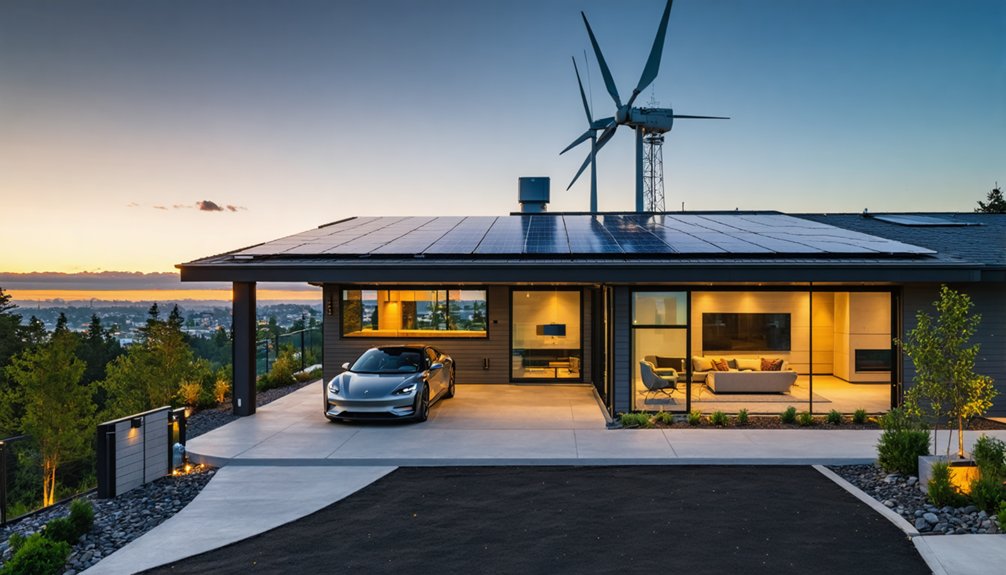
Green technology reduces energy usage by improving efficiency at every stage of supply and demand. Smart thermostats, LEDs, heat pumps, and adaptive controls cut waste in buildings and equipment. Smart grids, AI forecasting, and predictive analytics balance electricity use, lower peaks, and reduce transmission losses. Renewable power and batteries avoid fuel-burning losses and shift energy to high-use periods more effectively. Falling costs and supportive policies are accelerating adoption, with additional examples and impacts explained below.
Highlights
- Green technology cuts waste by using smart controls, efficient LEDs, heat pumps, and variable-speed equipment that match energy use to real demand.
- Smart grids and AI reduce energy usage by forecasting demand, shifting loads off-peak, and preventing over-generation across homes, buildings, and utilities.
- Renewable energy sources use no combustion and avoid many fossil-fuel conversion losses, lowering the total energy needed to deliver electricity.
- Battery storage reduces energy waste by storing excess renewable power and discharging during peak hours, flattening demand and improving grid efficiency.
- Falling costs, supportive policies, and predictive analytics accelerate adoption of efficient clean technologies, lowering operating energy use and emissions at scale.
How Green Technology Cuts Energy Waste
Several green technologies cut energy waste by making consumption more precise, responsive, and efficient.
Across buildings and industry, advanced controls, automation, and sensor analytics help communities use energy with less loss.
Smart thermostats reduce heating and cooling waste by optimizing runtime, while LED lighting cuts electricity use by 75 percent.
Variable speed motors also limit idle draw in appliances and equipment.
On larger systems, smart grids match supply with demand, and automation identifies leaks or faults before losses grow. In waste management, advanced thermal conversion technologies are improving energy recovery from municipal solid waste while reducing reliance on landfills. The waste-to-energy sector is also expanding quickly, with the global market valued at USD 45.4 billion in 2023 and projected to reach USD 144.3 billion by 2030, highlighting rapid market growth.
Demand-response programs lower peak consumption, often saving 10 to 20 percent, while real-time monitoring prevents potential spillage.
In production settings, process optimization strengthens these gains: predictive tools, early inefficiency detection, and digital twins help organizations reduce waste and cut energy use by about 20 percent overall. Better efficiency and longer product life can also help reduce e-waste growth, which reached 62 million tonnes globally in 2022.
Why Renewable Energy Uses Less Fuel
Beyond cutting waste through smarter controls, green technology also reduces energy use at the source by replacing systems that must burn fuel to produce power. Solar, wind, hydro, and geothermal generate electricity without combustion, while modern biofuels from waste lessen dependence on traditional fuel fuel supplies. This direct approach avoids the conversion losses common in fossil plants and supports low emissions. Reports on renewable growth track generation capacity, consumption, and emissions reductions to assess how these technologies lower fuel use.
The result is lower operating costs and broader adoption. Renewable facilities do not need ongoing fuel purchases, helping wind and solar stay competitive as global investment reached $2.2 trillion in 2025. Their scalable capacity also expands without matching increases in fuel demand. Globally, renewables now provide nearly one-third of electricity generation, highlighting their growing role in the power mix. The IEA reports renewable energy consumption as a share of total final energy use across electricity, heat, and transport, showing annual country data for comparing progress.
In 2022, U.S. renewables produced 913 billion kilowatt-hours without fuel, reinforcing why many countries increasingly see renewables as a practical, shared path forward.
How Smart Grids Reduce Energy Usage
Smart grids reduce energy usage by making electricity systems responsive, data-driven, and more precise in how power is delivered. Real-time monitoring across plants, networks, and homes reveals inefficiencies quickly, while AI forecasts usage patterns, weather, and system stress to guide smarter control. This coordination improves grid load management and supports demand shaping, shifting consumption toward off-peak periods and reducing waste. Utilities also track load factor and peak-to-average ratio to measure how efficiently electricity demand is being balanced across the system. Juniper Research projects that smart-grid deployments will generate $125 billion savings globally by 2027, highlighting the scale of efficiency gains these systems can deliver.
These capabilities lower transmission losses, improve capacity utilization, and reduce reliance on inefficient peaking generation. Reported results include peak demand reductions of 25% against baseline projections, 15% lower transmission losses in India pilots, and 20% energy efficiency gains in Denmark. Smart grids also cut renewable curtailment by more than 25% by 2030 and help communities share in cleaner, more reliable service while avoiding costly infrastructure upgrades. They are becoming even more important as data-center demand pushes U.S. electricity use sharply higher, with Lawrence Berkeley Lab projecting data-center consumption could reach 325–580 TWh by 2028.
Why Batteries Lower Peak Energy Demand
How do batteries lower peak energy demand? They store electricity when supply is abundant, then discharge it during hours of highest use. This process, often called Peak shaving, reduces strain on the grid and lowers reliance on fossil fuel peaker plants.
When charged with renewable power, batteries shift clean energy into expensive evening periods and flatten load curves. Utilities often prefer centralized dispatch because it improves the accuracy and timing of peak-demand response. Because batteries are not a primary electricity source, they depend on power generated elsewhere and function mainly as stored electricity for later use.
Growth in Battery capacity strengthens this role. U.S. utility-scale storage surpassed 26 GW in 2024, with 10.4 GW added that year alone. Falling costs and better energy density make batteries practical for utilities, businesses, and homes.
Still, effective peak reduction depends on program design. Incentives must reward discharge during true peaks, and charging from fossil fuels can weaken climate benefits and raise emissions through losses slightly. Performance-based payments tied to peak reduction can help ensure batteries discharge when the grid needs them most.
How Efficient Buildings Need Less Power
Efficient buildings need less power because they match energy use more closely to actual demand instead of running systems at fixed levels regardless of occupancy or grid conditions.
Through occupancy analytics, facilities can infer real activity from plug loads and HVAC draw, cutting idle runtime and ending waste in empty spaces.
Responsive controls shift loads across smart chargers, adaptive servers, and electrified HVAC without sacrificing comfort or operational standards.
This flexibility reduces peak grid strain while treating responsiveness as a core performance measure. U.S. electricity demand is projected to keep rising through 2029, driven in large part by expanding data-center demand. Buildings that respond to occupancy can cut idle run time by up to 30% without new hardware through occupancy-driven control. Controls and automation often deliver outsized gains through phased planning before major equipment replacements are needed.
High-performance heat pumps further lower energy needs by replacing fossil heating with efficient electric systems aligned with cleaner grids.
When multiple responsive systems operate together, baseload consumption begins to reflect how people actually use shared spaces, helping organizations support comfort, resilience, and responsible energy stewardship for everyone.
Why Clean Tech Costs Keep Falling
Clean tech costs keep falling because scale, competition, and better performance are reinforcing one another across the market.
Electrolyzer manufacturing capacity now exceeds 50 GW per year, while stack prices fell from about $250/kW in early 2024 to below $100/kW.
System costs have followed.
A broader supply chain and fierce manufacturer rivalry are accelerating these declines across regions.
Battery grid storage costs are more than twice lower than two years ago, and installations are expected to double in 2025.
More than 90 percent of new renewable projects now undercut fossil alternatives, with solar attracting $450 billion in 2024.
Policy incentives, predictive maintenance, better forecasting, and smarter battery optimization continue improving economics, helping communities and businesses feel aligned with a practical, lower‑cost energy shift together.
How Green Technology Supports Lower Emissions
Across the energy system, green technology lowers emissions by replacing high‑carbon power and fuel use with cleaner alternatives that scale across electricity, industry, and buildings.
Power‑sector emissions fell 41% through 2024 as coal use declined and renewable generation expanded, aided by sharply lower solar and wind costs. This shift supports broader participation in cleaner growth without repeating older high‑carbon development patterns.
Evidence also shows coordinated innovation matters most. Green technology diffusion combined with development delivers significant CO₂ reductions, while isolated advances often do not.
In industry, where emissions have risen fastest since 1990, falling coal and petroleum coke use signals early decarbonization progress.
Reaching net zero, however, requires supportive carbon policy, effective carbon pricing, and infrastructure changes that help communities secure affordable energy, healthier environments, and shared economic resilience.
References
- https://bcse.org/market-trends/top-six-trends/
- https://www.weforum.org/stories/2025/12/global-energy-2026-growth-resilience-and-competition/
- https://press.spglobal.com/2025-12-09-S-P-Global-Energy-Releases-Key-Clean-Energy-Trends-for-2026-as-AI-Growth-and-Geopolitical-Shifts-Reshape-Global-Energy-Markets
- https://www.abiresearch.com/blog/renewable-energy-statistics
- https://www.adopter.net/knowledge-hub/50-green-tech-statistics-you-need-to-know-in-2026
- https://www.unsdsn.org/news/powering-a-green-energy-future-for-2026-and-beyond/
- https://www.deloitte.com/us/en/insights/industry/renewable-energy/renewable-energy-industry-outlook.html
- https://www.wavestone.com/en/insight/anticipating-2026-trends-reshaping-energy-landscape/
- https://ewastemonitor.info/the-global-e-waste-monitor-2024/
- https://www.bls.gov/opub/btn/volume-2/pdf/reduce-reuse-recycle-green-technologies-and-practices-at-work.pdf

