


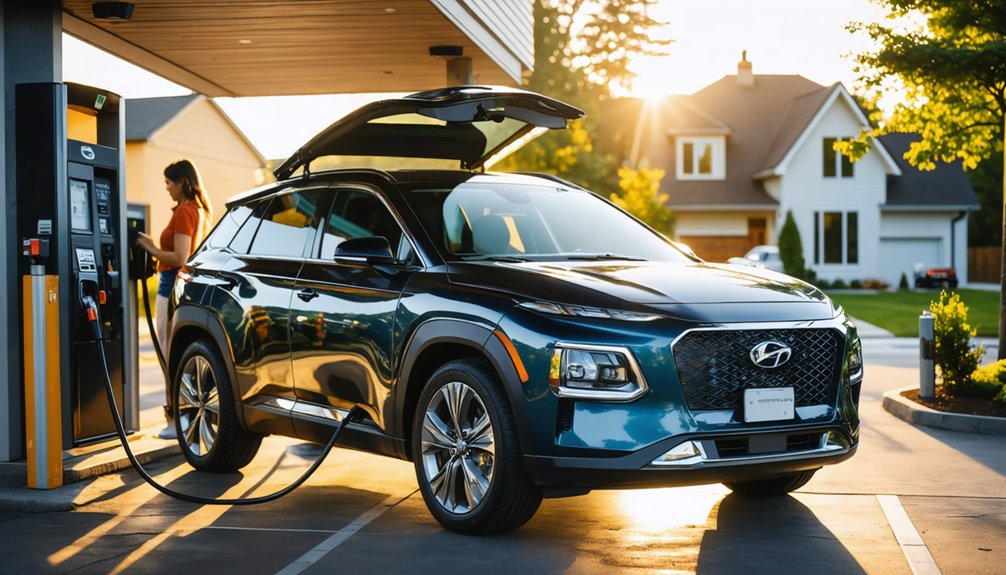
Hybrid vehicles still offer strong value because they cut fuel use by roughly 20 to 35 percent, lower lifetime emissions versus gasoline models, and avoid the charging demands that still limit EV practicality for many households. They also reduce maintenance through regenerative braking and can recover higher purchase prices through fuel savings over time. With expanding model choices, strong consumer demand, and growing automaker investment, hybrids remain a practical middle path with several important advantages ahead.
Highlights
- Hybrids cut lifecycle CO₂ emissions by about 20% versus gasoline cars while avoiding the larger battery footprint of full EVs.
- They deliver 20–35% better fuel economy, often saving owners thousands of dollars in fuel and maintenance over time.
- Hybrids need no charging, refuel anywhere quickly, and eliminate range anxiety for long or unpredictable trips.
- Lower upfront prices than many EVs make hybrids a practical middle ground for buyers wary of charging costs or battery uncertainty.
- Strong consumer demand, expanding model choices, and major automaker investment support hybrid resale value and long-term market relevance.
Why Hybrid Vehicles Still Make Sense
Although fully electric vehicles draw most of the attention, hybrid vehicles still make practical sense because they deliver meaningful emissions reductions without requiring drivers to rely entirely on charging access or a fully decarbonized grid.
Across full life cycles, hybrids emit about 20% less than gasoline vehicles, while plug‑in hybrids cut roughly 30%, even after accounting for battery production and real‑world use. Diesel vehicles, by contrast, are comparable to gasoline in lifecycle emissions. However, recent real‑world data shows that some plug‑in hybrids produce far more CO₂ than official tests suggest, with emissions averaging about 5× higher.
That evidence supports continued market adoption among drivers seeking credible emissions reduction, infrastructure independence, and confidence during the phase to lower grid emissions. Fully electric vehicles can reduce lifecycle greenhouse gas emissions by about 58% lower than comparable petrol cars, showing why they attract growing policy and consumer attention.
In electric operation, hybrids can also reduce urban air pollution.
Their practical appeal is strengthened by battery longevity, potential resale value, selective tax incentives, and community‑oriented cost savings benefits.
For many households, hybrids remain an inclusive, lower‑emission pathway that aligns environmental progress with everyday mobility needs today.
How Hybrid Vehicles Save Money Daily
Beyond their emissions benefits, hybrid vehicles can lower everyday driving costs in measurable ways. Their daily economy comes from stronger mileage efficiency, often 20% to 35% better than comparable gas models.
A driver moving from 25 mpg to 35 mpg cuts fuel consumption by about one-third, reducing fuel cost by hundreds annually. Consumer Reports says many hybrid owners save more than $4,000 over the vehicle’s life compared with similar gas models, underscoring their long-term savings. At $3.50 per gallon and 15,000 miles a year, a hybrid that costs $4,000 more than a comparable gas car can reach break-even in about 6.6 years.
The 2025 Honda Civic Sport Hybrid, for example, saves about $400 per year, while the Ford Maverick hybrid recovers its premium in just over three years.
Longer term, these savings help many drivers feel they made a smart, mainstream choice.
Maintenance reduction also strengthens value: regenerative braking lowers brake wear, and Consumer Reports estimates about $4,600 in lifetime upkeep savings. Many hybrids also tend to hold their value well, adding another layer of resale strength.
Added tax incentives for some plug-in hybrids and solid resale value can further improve total ownership economics.
Why Hybrid Vehicles Beat EV Uncertainty
For many drivers, hybrids reduce the uncertainty that still surrounds full EV ownership because they deliver electrified efficiency without depending on charging access, long plug‑in sessions, or tightly planned travel. They also require no charging, which makes them easy to adopt without changing daily routines. Traditional hybrids never plug in, instead recharging while driving.
They refuel quickly at any gas station, making them practical for rural areas, highways, and unpredictable schedules where the charging grid remains uneven.
Hybrids also offer stronger range assurance. While many EVs deliver roughly 200 to 300 miles per charge, real‑world conditions can reduce that figure.
A hybrid avoids range anxiety through its gasoline backup, giving households confidence on long trips or last‑minute drives. It also carries a lower upfront cost than most EVs and avoids larger concerns around battery lifespan, resale pressure, and rapid technology shifts.
That balance helps more drivers feel confidently included in electrification.
Which Hybrid Vehicles Offer the Best Fit?
Which hybrid vehicle fits best depends less on the badge and more on how a household uses space, fuel, and budget.
For many buyers seeking a practical community standard, compact SUVs lead: the Kia Sportage Hybrid reaches up to 42 mpg, the Hyundai Tucson Hybrid posts 35–38 mpg, and the Honda CR-V Hybrid pairs strong ratings with 35–40 mpg. The 2026 Mazda CX-50 Hybrid is another strong contender, offering AWD standard along with 38 mpg combined. Car and Driver’s testing process supports these comparisons by measuring over 200 data points across hundreds of vehicles each year, reflecting its testing methodology. Edmunds also ranks the Hyundai Tucson Hybrid highly, giving it an 8.8/10 for its strong value.
For a tighter budget SUV fit, the Kia Niro Hybrid starts under $29,000 and returns 49–53 mpg, while the Corolla Cross Hybrid delivers 42 mpg with useful cargo flexibility.
Families needing more room can look to the Santa Fe Hybrid or Grand Highlander Hybrid.
Sedan shoppers focused on mileage efficiency should note the Toyota Camry, with up to 53 city mpg, plus strong options from the Civic, Elantra, Prius, and Corolla Hybrid.
Where Hybrid Vehicles Are Gaining Ground
Hybrid vehicles are gaining the most ground in markets where emissions rules are tightening faster than charging networks can be built.
In these regions, regional policy and infrastructure gaps are shaping demand more than consumer preference alone. Industry forecasts show hybrids and plug-in hybrids remain a critical bridge technology in 2026 as infrastructure gaps and uneven consumer readiness continue to slow full EV adoption.
The United Kingdom and South Korea illustrate this pattern, posting annual hybrid growth of 21.2% and 20.5% as compliance deadlines accelerate adoption.
Asia Pacific remains the fastest-growing regional market, supported by platform electrification, rising infrastructure investment, and strong participation from Hyundai, Nissan, and Toyota. North America still held the largest share in 2025, accounting for 52% of the global hybrid vehicle market.
Yet households and fleets across developing areas still face uneven charging access, which keeps mild and full hybrids relevant.
North America shows a similar split.
In the Raleigh-Durham Triangle, hybrids reached 18.8% of new registrations, outperforming fully electric vehicles and reinforcing their practical, broadly shared appeal. Heister Automotive forecasts EVs to comprise 5-10% of sales next year, matching national trends.
How Automakers Are Betting on Hybrid Vehicles
Automakers are responding to the same market signals by committing capital, capacity, and product strategy to hybrids at a scale that would have seemed unlikely during the peak of BEV-only planning.
Toyota alone is retooling Ontario with $1.1 billion for an all‑hybrid 2026 RAV4, while additional investments across U.S. plants expand hybrid powertrain output. In 2025, hybrids accounted for more than half of Toyota’s U.S. sales, underscoring its hybrid leadership.
These moves reflect strategic diversification after costly EV reversals. Ford redirected spending after major write‑downs, GM took a $6 billion charge, and Honda reduced electrification plans to favor hybrids.
Demand helps explain the shift: hybrids reached 15 % of U.S. transactions in Q3 2025, ahead of full EVs at 10 %.
Alliances with firms such as BYD and Leapmotor also strengthen supply chain resilience, reinforcing a mixed‑powertrain future many buyers increasingly recognize.
When Hybrid Vehicles Offer the Most Value
Timing matters most when fuel prices rise, charging access remains limited, and buyers want lower operating costs without changing daily habits.
During spring 2022 fuel‑price spikes, hybrid consideration climbed as drivers sought efficiency without relying on outlets or new routines. That value remains clear where charging infrastructure still trails demand: conventional hybrids deliver better economy at low speeds, require no home installation, and function as practical charging‑gap solutions.
Market data reinforces the case.
Hybrid registrations rose from 3.1% in Q2 2020 to 16.3% by Q2 2025, while conventional hybrids are expected to reach 12.5% of 2025 sales, ahead of EVs at 9.5%.
Preference surveys also show broader acceptance, with 45% of Americans open to hybrids versus 33% to EVs.
For mainstream buyers, hybrids fit the moment and the crowd.
References
- https://www.fortunebusinessinsights.com/hybrid-vehicle-market-105435
- https://www.futuremarketinsights.com/reports/global-hybrid-vehicles-market
- https://news.dealershipguy.com/p/automakers-rebalance-portfolios-as-hybrid-vehicle-demand-accelerates-2026-01-02
- https://www.eia.gov/todayinenergy/detail.php?id=67144
- https://caredge.com/guides/electric-vehicle-market-share-and-sales
- https://www.torquenews.com/1083/hybrids-pace-outsell-evs-3-1-2026-hybrids-surge-and-ev-adoption-slows-us-market-were-evs
- https://www.precedenceresearch.com/hybrid-vehicle-market
- https://www.datainsightsmarket.com/reports/hybrid-vehicle-market-14940
- https://www.foundersclick.com/blogs/12441/Hybrid-Vehicle-Market-Outlook-2026-Trends-Growth-Drivers-and-Forecast
- https://www.transportenvironment.org/articles/plug-in-hybrids-pollute-almost-as-much-as-petrol-cars-eu-data

