

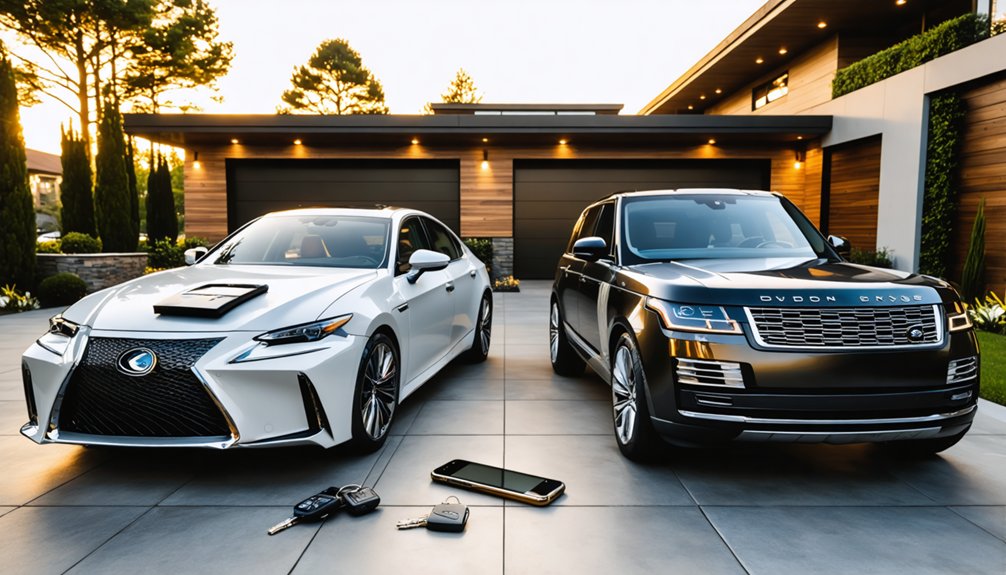

Car subscription models prioritize access, flexibility, and predictable monthly costs, while ownership emphasizes long-term control, unlimited use, and equity. Subscription fees often bundle insurance, maintenance, taxes, and roadside assistance, reducing admin and upfront expense, but they do not create an asset. Ownership can cost less over time, especially for high-mileage drivers or those keeping a vehicle after loan payoff. The better choice depends on mileage, budget stability, and lifestyle needs, with key trade-offs explained ahead.
Highlights
- Car subscriptions bundle insurance, maintenance, taxes, and roadside assistance into one monthly fee, making costs simpler and more predictable than ownership.
- Ownership can cost less long term because loan payments end and the vehicle retains resale value, while subscriptions build no equity.
- Subscriptions offer short terms, easy cancellation, and vehicle swapping, making them better for changing lifestyles and urban users.
- Ownership suits high-mileage and long-distance drivers because it avoids mileage caps, overage fees, and most subscription restrictions.
- Subscriptions reduce upfront costs and administrative hassle, while ownership offers more freedom to customize, insure, and maintain the vehicle independently.
Car Subscription vs Ownership at a Glance
At a glance, car subscription models emphasize access and adaptability, while traditional ownership centers on long-term control and asset retention. Subscriptions let drivers switch vehicles as routines shift, adjust plan lengths, and leave without resale or trade-in burdens. Ownership, by contrast, ties mobility to longer commitments and direct responsibility for maintenance, insurance, and repairs. Many subscription services also bundle insurance and maintenance into one monthly payment, reducing the practical burdens that ownership places on drivers.
This distinction has clear market impact, especially among consumers seeking simple participation in modern mobility. Consolidated service coverage reduces administrative friction and lowers knowledge barriers, making vehicle access feel more inclusive. Younger adults increasingly favor usership, viewing cars as practical tools rather than enduring assets. Subscriptions also broaden eligibility by removing large upfront payments, drawing in people who might otherwise delay or avoid car access altogether. The resulting market impact extends beyond convenience into automotive market expansion. Industry forecasts suggest subscription growth could reshape how a significant share of new vehicles reach drivers by 2030. However, for drivers who log significant distances each year, high-mileage economics may still make traditional ownership the more cost-effective option over time.
How Car Subscription Costs Compare Monthly
How do monthly costs actually stack up when subscription access is measured against ownership? Entry-level subscriptions begin around $358 to $500 monthly, while many mainstream plans range from $600 to $1,159. Luxury programs rise sharply, with Porsche Drive reaching $2,100 to $3,600.
By comparison, average ownership financing sits near $858 monthly, and leasing averages about $700. Unlike buying or leasing, subscriptions typically bundle maintenance and insurance into the monthly payment. This all-in-one structure can improve cost transparency for drivers comparing recurring expenses.
This comparison shows meaningful pricing elasticity across vehicle classes and providers. Some services undercut the average loan payment, while others exceed premium lease costs. However, monthly comparisons require attention to mileage caps: Finn includes 850 miles, Go offers 833, and Porsche Drive allows 2,000 on select plans. Separately, many automakers now layer ownership with recurring connected-service fees, reflecting a broader shift toward subscription services across the industry.
For consumers seeking a payment structure that aligns with their peers and budget expectations, subscriptions can look competitive monthly, especially at the lower end of the market today.
What You Get With a Car Subscription
Consider what a car subscription consolidates before comparing it with ownership. Most programs bundle insurance, routine service, and roadside assistance into one monthly payment, creating clearer budgeting and reducing administrative friction. Subscribers also gain flexible vehicle access, often switching among sedans, SUVs, or higher-trim models as household needs change. Many services also offer all-inclusive pricing, which helps subscribers anticipate monthly expenses without separate bills for core vehicle needs.
Beyond access, subscriptions commonly include connected technology and premium features that help members feel current and supported. Over-the-air updates, direction, Wi‑Fi, remote start, parking assist, and driver‑assistance systems are often activated through apps with minimal paperwork. Some services add heated seats, premium audio, or performance modes without permanent commitment. Many consumers still weigh these offerings against broader subscription fatigue, since recurring fees across entertainment, software, and vehicle services can feel costly and overwhelming. Over time, higher lifetime costs can make subscriptions more expensive than paying upfront for permanently owned features. This digital convenience carries tradeoffs, including data privacy questions and the sustainability impact of rapidly changing vehicle use patterns, yet the package emphasizes simplicity, adaptability, and participation in a modern mobility ecosystem.
Where Ownership Still Costs Less
Subscription convenience carries a premium, and ownership often costs less when a vehicle remains in service for years.
After a loan is repaid, Equity buildup gives owners an asset, while subscriptions continue charging indefinitely without ownership value.
For households planning consistent use, traditional financing usually delivers lower monthly costs because it excludes the markup attached to bundled convenience. Car loan payments alone account for 46% of transport cost, which helps explain why ownership can become more economical once that burden disappears.
Ownership also favors drivers with high annual mileage. Subscription plans often impose mileage limits, which can make long-distance driving more expensive over time.
Subscription programs commonly apply distance caps and overage fees, whereas owned vehicles can be driven freely, with expenses tied mainly to fuel, insurance, and upkeep.
For people who rarely switch cars, paying extra for swap access offers limited practical return.
Maintenance‑related savings can further tilt costs toward ownership when drivers shop insurance independently, manage repairs selectively, or perform routine service themselves. Buying also allows vehicle customization without subscription restrictions.
That approach often feels financially grounded.
How Flexible Car Subscription Models Really Are
At a practical level, car subscription flexibility is real, though it varies by provider and price tier. Most programs offer flexible terms spanning one to twelve months, with short notice cancellation and far lower exit costs than leases or loans. Monthly pricing also removes large down payments and folds insurance, maintenance, and roadside assistance into one predictable bill. Many subscriptions also bundle premium features like heated seats, advanced navigation, and upgraded audio as part of the single monthly fee. Survey data also suggests this flexibility is not just theoretical, since many drivers value the option to return a vehicle early as a key part of the low-risk access.
That flexibility extends to vehicle access. Many services provide meaningful model variety, letting subscribers swap cars monthly as commuting patterns, family needs, or fuel priorities change. A city hatchback can become an SUV, or a petrol vehicle can be exchanged for an EV without long commitment. Feature packages may also be added or removed, including mileage allowances, technology upgrades, or extra drivers. For households seeking adaptability without administrative friction, that structure feels especially more responsive overall. Digital platforms also make this easier by enabling automated billing, contract changes, and vehicle swaps through customer portals.
Who Should Choose Car Subscription Over Buying
Choose car subscription over buying when predictable access matters more than building equity. This fit is strongest for urban professionals who prioritize access in on-demand routines and prefer one monthly payment covering insurance, maintenance, and registration.
It also suits households in lower-car-ownership metros, where urban flexibility supports convenient driving without full ownership commitment.
Subscriptions also align with millennial mobility and Gen Z preferences for adaptable transport without multi-year locks. They appeal to drivers frustrated by ownership costs, especially maintenance and insurance, each cited by 51% as major pain points, and depreciation, noted by 25%.
Long-term mobility seekers may also benefit, particularly through programs offering premium vehicles, upgrades, and concierge support. For these groups, subscriptions provide stable inclusion, reduced administrative burden, and easier alignment with changing lifestyle needs and expectations.
How to Decide Between Car Subscription and Ownership
How should a driver decide between a car subscription and ownership? The choice depends on usage, budget stability, and lifestyle fit within a changing mobility community.
Subscriptions remove upfront costs and bundle insurance, maintenance, taxes, and roadside assistance into one predictable fee, usually aligning with the under-£400 expectation. Ownership can appear cheaper monthly yet often hides depreciation and variable expenses.
A driver needing flexibility, short commitments, or pause options may benefit from subscriptions, especially in urban settings. Frequent long-distance travel, high mileage, and preference for broader vehicle choice generally favor ownership.
Long-term users may also find ownership more economical after loans end. Careful comparison should include sustainability impact, tax incentives, mileage limits, and convenience. The best decision matches personal travel patterns with the financial and practical trade‑offs each model presents.
References
- https://www.fleetmanagementweekly.com/study-reveals-over-half-of-americans-are-open-to-a-car-subscription-instead-of-purchasing/
- https://www.youtube.com/watch?v=msvUzVH9O6M
- https://www.autoblog.com/news/study-reveals-over-half-of-americans-are-open-to-a-car-subscription-instead-of-purchasing
- https://www.imarcgroup.com/united-states-car-subscription-market
- https://www.autoinsurance.com/research/car-ownership-statistics/
- https://www.researchandmarkets.com/reports/5933962/car-subscription-market-report
- https://yougov.com/en-us/articles/49374-us-car-owners-interested-in-trying-car-subscription-model
- https://www.just-auto.com/interview/subscription-or-lease-discussing-the-car-ownership-model/
- https://www.jupiterchev.com/blogs/6872/the-impact-of-vehicle-subscription-services-on-traditional-car-ownership
- https://www.loopit.co/en-us/blog/usa-car-subscription-services-analysis