

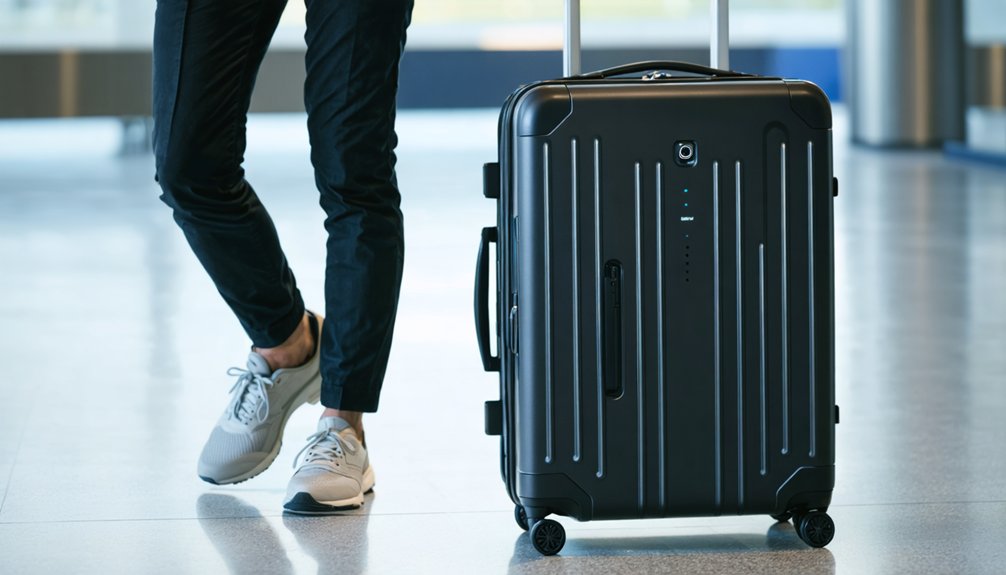

Smart travel gear improves convenience by reducing friction at every stage of a trip. Smart luggage adds USB charging, weight sensors, biometric locks, and tamper alerts to speed check-ins and protect belongings. GPS, BLE, and hybrid trackers help locate bags in airports and hotels with greater accuracy. Compact GaN chargers and compliant power banks keep devices powered during delays. Packing cubes, modular compartments, and travel-size essentials simplify organization. The sections ahead outline which upgrades matter most.
Highlights
- Smart luggage with biometric locks, remote controls, and tamper alerts speeds security checks and improves peace of mind.
- GPS, cellular, and Bluetooth trackers help travelers quickly locate bags in airports, hotels, and transit connections.
- Portable power banks, GaN chargers, and universal adapters keep essential devices charged during delays and international travel.
- Packing cubes, compression organizers, and modular compartments save space and make essentials easier to find fast.
- Smart accessories like RFID wallets, waterproof phone gear, and organized backpacks reduce hassle and protect valuables on the go.
What Makes Smart Travel Gear Convenient?
Smart travel gear is convenient because it compresses multiple essential functions into compact, highly compatible devices that reduce packing bulk and daily friction. This advantage appears in products built around compact design, such as foldable chargers, credit-card-sized trackers, slim battery packs, and universal adapters that fit crowded backpacks without sacrificing capability. The Ugreen USB 3.0 to USB‑C Adapter adds broad compatibility by connecting older USB‑A ports to newer USB‑C devices for both charging and data transfer while traveling.
For travelers who value preparedness and shared standards, these tools create confidence through portability, reliability, and broad device compatibility. Strong magnetic attachments and reinforced hinges also improve convenience by enabling quick setup and dependable secure attachment in busy travel environments. Fast-charging devices like the Anker Nano Charger extend convenience through pocket-size power that keeps phones, tablets, and earbuds reliably charged without taking up valuable bag space.
Convenience also comes from multi functionality. A single tool can replace several small items, while a pouch can handle snacks or liquid rules, and a wallet can add stand support.
Accessories that charge, hold, stack, or adapt across phones, tablets, and wearables reduce clutter and decision fatigue. The result is a more organized, capable travel setup that feels intentionally modern and dependable.
Smart Luggage Features That Save Time
How do frequent travelers move through terminals faster with less friction? Industry evidence points to smart luggage features that remove common delays.
USB charging ports keep phones powered without hunting for outlets, supporting uninterrupted boarding passes, work, and communication. This convenience aligns with strong demand for GPS‑tracked luggage, with 32% definitely interested and 41% probably interested in features that help prevent lost bags.
Built in weight sensors flag overloads before check in, helping travelers avoid fees and repack efficiently.
Digital locks, including biometric access and remote locking, reduce fumbling at security while strengthening protection through tamper alerts.
App based controls centralize battery, lock, and status updates, enabling quicker decisions and smoother queue management. In 2024, Wi‑Fi enabled models accounted for 45.70% share of revenue, reflecting how strongly travelers value remote locking, GPS, overweight notifications, and app control.
Newer models add AI navigation through Follow Me capability and obstruction detection, shortening transit effort across crowded concourses.
For organized packers, modular compartments also speed access to essentials.
Together, these functions help travelers move with confidence and belong among seasoned flyers. Still, airline battery rules can create last minute check in disruptions when lithium ion power packs must be removed from checked bags.
How GPS and Bluetooth Reduce Travel Stress
Frequent travelers reduce uncertainty when GPS and Bluetooth work together across the full trip. GPS supplies precise real-time positioning, route scenario, and live updates that support Stress free navigation across unfamiliar cities, roads, and transit hubs. Cellular-enabled trackers extend visibility when satellite signals weaken, helping journeys stay predictable and calm. The market outlook supports this shift, with USD 2.5 billion in projected value by 2034 as demand rises for connected travel and location tools. More than 170 million Americans already use dedicated location devices beyond smartphones, signaling broad adoption of travel-friendly tracking tools. Newer travel devices also benefit from dual-frequency GNSS, which improves positioning accuracy in more challenging environments.
Bluetooth strengthens that confidence at close range by locating personal items with nearby accuracy in terminals, hotel rooms, and vehicle seats. BLE supports low-power, extended use, while smartphone syncing keeps item finding simple even without internet access. Hybrid devices combine global GPS coverage with Bluetooth proximity finding for Seamless tracking from curbside pickup to indoor check-in. Market adoption reinforces trust: the smart tracker category continues strong growth, and millions of Americans now rely on dedicated location devices beyond smartphones while traveling regularly.
Smart Locks and Alerts Add Security
For travelers who prioritize both convenience and protection, connected locks add a meaningful security layer through biometric entry, remote access, and instant alerts.
Fingerprint recognition remains the dominant biometric method, while facial recognition is gaining ground in travel-focused designs. In China, fingerprint-based identification accounted for 92% of the smart lock market in 2019, underscoring its clear dominance. These systems reduce dependence on keys and strengthen access control through encrypted mobile integration.
Remote management allows locking, opening, and reviewing access logs from virtually anywhere, giving travelers greater confidence while moving through unfamiliar environments. Many newer models also support Bluetooth, NFC, and GPS tracking as part of a broader IoT integration trend.
Biometric alerts and Tamper notifications provide immediate awareness of suspicious activity, supported by anti-intrusion features, audit trails, and multi-factor authentication.
When supported by strong encryption and reliable cloud platforms, smart locks deliver a more trusted experience. Their rapid market growth signals broad consumer confidence and a growing expectation that modern travel gear should protect belongings without complicating the trip. The category is also projected to reach about $284 million by 2033, reflecting strong market growth in connected travel security.
Charging Gear That Keeps You Moving
Where power access becomes unpredictable, well-designed charging gear turns a dead battery from a trip-ending problem into a manageable inconvenience. Experts typically recommend at least 10,000 mAh of portable power, making compact options like the Baseus PicoGo AC22 Ultra Mini especially practical, with 45 W USB‑C charging, a built‑in cable, and clear battery‑monitoring via digital display. Its AirPods-case size also makes it especially easy to slip into a pocket or small travel pouch.
For broader coverage, multi‑port GaN chargers and universal adapters keep phones, laptops, and family devices running together. Carrying power banks in carry-on only also helps travelers stay compliant with TSA and IATA battery rules. Because flight delays are increasingly common in 2026, keeping backup power close at hand helps travelers manage disruptions without losing access to boarding passes, maps, or emergency contacts.
The TESSAN Voyager 205 and CES 2026 all‑in‑one models demonstrate why travel charger sales rose 45 % in 2025, according to Statista.
Reliable charging now signals preparedness, particularly for remote workers and connected travelers. Active temperature management, reinforced cables, and juice‑jacking awareness further strengthen trust, especially across international outlets and extreme climates.
Space-Saving Travel Gear for Easier Packing
Smart charging keeps devices ready, but efficient packing determines how easily the rest of a trip unfolds.
Experienced travelers rely on compact efficient cubes to separate shirts, socks, and layers into manageable sections, reducing clutter and simplifying repacking.
Compression versions save 15 to 30 percent on soft clothing, especially when garments are rolled inside rather than folded flat.
This system creates color coded organization that helps distinguish daily outfits, cold weather layers, and occasional use items.
Limiting a suitcase to about five cubes preserves usable space, while built-in handles support quick transfers to hotel drawers.
Travel minis and decanted toiletry containers further reduce bulk and meet carry-on rules.
Together, these tools help travelers fit more into smaller luggage, avoid forgotten essentials, and move with greater confidence and ease.
How to Choose Smart Travel Gear
Choosing the right travel gear starts with a clear assessment of trip length, climate, planned activities, and overall travel style, since a city itinerary demands different essentials than a hiking route or organized tour. Experts recommend matching luggage size, carry-on limits, and comfort needs before purchasing.
Reliable choices emphasize performance fabrics, Eco friendly materials, and versatile pieces that handle multiple conditions. Neutral colors simplify coordination, while UPF protection, bug resistance, and RFID-blocking features add practical security. Bags with Modular compartments, 180-degree openings, water-resistant shells, and organized inserts improve access and order. Trusted brands and tested options such as durable backpacks, slim smart wallets, powerbanks, and waterproof phone accessories deliver consistent value. A disciplined review of weight, frequency of use, and rental alternatives helps travelers pack confidently and feel prepared everywhere.
References
- https://smartflyer.com/story/2026-travel-trends/
- https://www.greenfield-bag.com/news/new-trend-of-the-global-luggage-and-bag-indust-85236911.html
- https://www.theinnatstonecliffe.com/blog/the-ultimate-packing-list-best-items-for-travel-in-2026-including-mackinac-island-essentials
- https://www.thebusinessresearchcompany.com/report/travel-accessories-global-market-report
- https://www.youtube.com/watch?v=AhbumQ1XZ4o
- https://www.tsxluggage.com/news/the-ultimate-guide-to-2026-luggage-industry-trends-from-sustainable-design-to-smart-travel-gear/
- https://www.packhacker.com/guide/travel-gift-ideas/
- https://www.moft.us/blogs/news/best-travel-gadgets
- https://www.carryology.com/liking/buyersguide/15-awesome-long-haul-travel-essentials/
- https://www.geekyexplorer.com/best-travel-accessories-items/